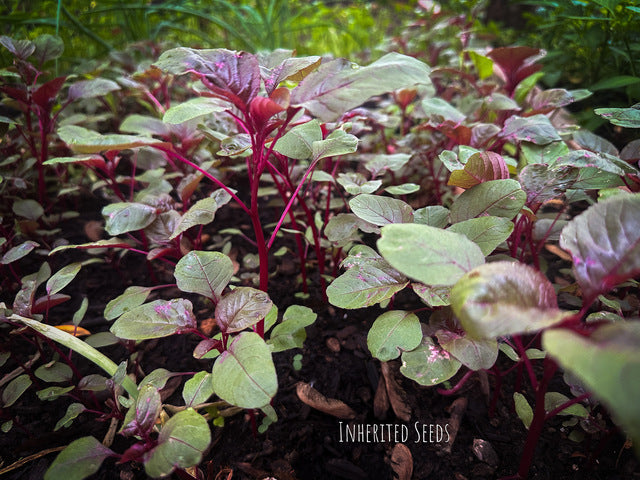
Amaranth Indian Red / Sigappu Keerai / Lal Chauli
Amaranth Indian Red / Sigappu Keerai / Lal Chauli
Couldn't load pickup availability
Indian Red Amaranth · Heirloom · Open-Pollinated · Naturally Grown · Non-GMO · Traditional to India
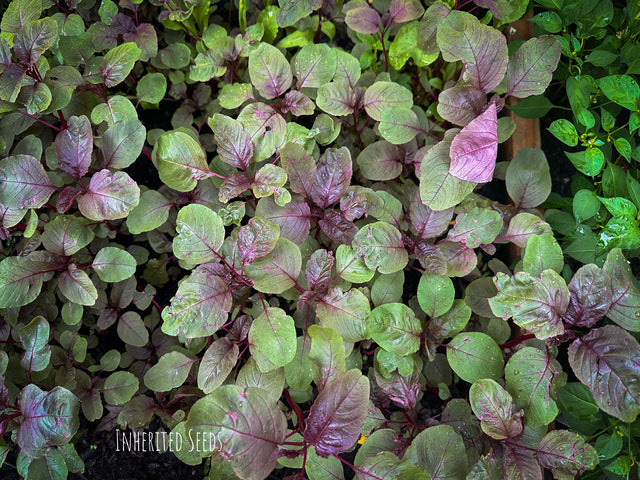
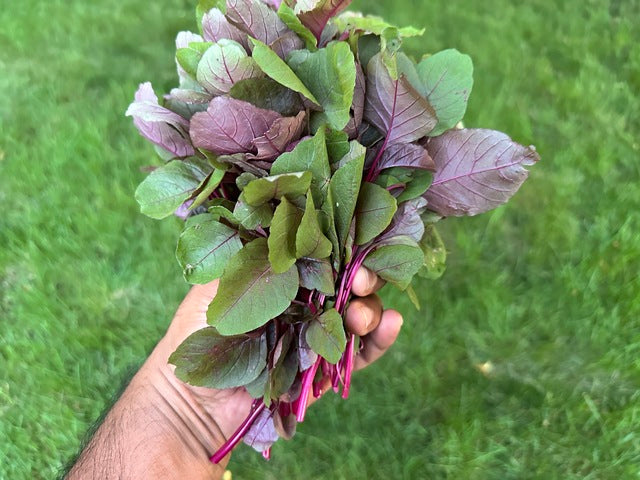
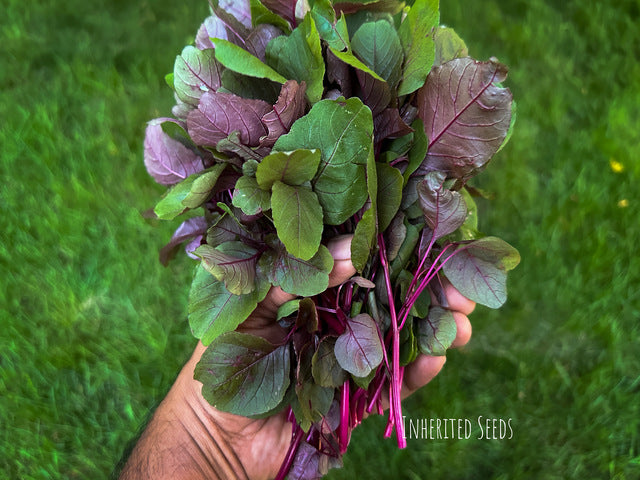
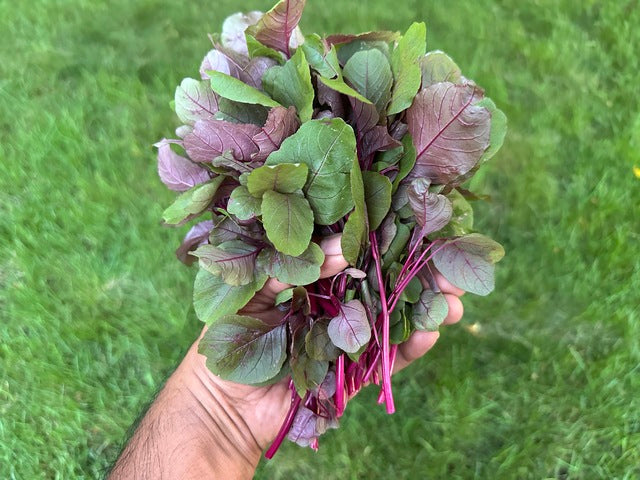
Indian Red Amaranth brings jewel-toned color to both your garden and your plate. Its ruby-red leaves and stems are tender and mild, and they tint everything they touch a gorgeous pink. It's the red keerai of Tamil homes, the chuvanna cheera of Kerala and Bengal's lal shaak. It grows fast in summer heat and gives repeat cuttings for weeks.
Why Grow Indian Red Amaranth?
- Stunning ruby leaves that double as an ornamental
- Tender, mild leaves and stems ready in about a month
- Cut-and-come-again harvests from one sowing
- Thrives in heat and humidity that ruin spinach
- Easy to grow in beds or containers
Plant Profile
Plant Profile
Botanical Name: Amaranthus tricolor (red type)
Common Name: Red Amaranth, Lal Chaulai, Sigappu Keerai
Type: Heirloom, open-pollinated
Crop: Leafy green
Leaf Color: Deep red to burgundy
Plant Habit: Upright and bushy, 1.5–4 ft if left to grow
Season: Warm season, late spring through early fall
Sun: Full sun to light shade
Days to Harvest: 25–40 days (baby leaves from 21 days)
Sowing Depth: 1/8 in., barely covered
Germination: 5–10 days at 70–85°F soil
Harvest: Cut tops and leaves at 8–12 in.; side shoots regrow
Garden Use: Raised beds, containers, ornamental edging, microgreens
Culinary & Traditional Uses
Culinary & Traditional Uses
Red amaranth cooks like spinach and turns dishes a beautiful rosy pink. Use leaves and tender stems.
- Chuvanna Cheera Thoran: the Kerala coconut stir-fry
- Sigappu Keerai Poriyal and Masiyal: Tamil stir-fry or garlicky mash
- Lal Shaak Bhaja: Bengali sauté with garlic and dried chili
- Lal Chaulai Saag: North Indian style with garlic and onion
- Thotakura Pappu: Andhra amaranth dal
- Microgreens and baby leaves for salads and garnishes
How to Grow
How to Grow
Red amaranth is easy and fast. Sow directly outdoors once the soil warms.
- Sow outdoors 1–2 weeks after your last frost date, when soil is 65°F or warmer.
- Prepare a sunny bed with loose, compost-rich soil, or use a container at least 8 in. deep.
- Mix seeds with fine sand, sprinkle thinly in rows 8–12 in. apart and cover with 1/8 in. of soil.
- Keep soil evenly moist until seedlings appear in 5–10 days.
- Thin to 6 in. apart and enjoy the thinnings as microgreens.
- Cut the top 4–6 in. when plants reach 8–12 in.; they regrow in 1–2 weeks.
- Sow again every 3 weeks through midsummer for a steady supply.
What NOT To Do
- Don't sow into cold soil
- Don't bury seeds deep; a light dusting of soil is enough
- Don't let plants flower if you want leaves
- Don't let soil dry out during germination
Regional & International Names
Regional & International Names
- Tamil: Sigappu Keerai, Sivappu Thandu Keerai (சிவப்பு கீரை)
- Malayalam: Chuvanna Cheera (ചുവന്ന ചീര)
- Telugu: Erra Thotakura (ఎర్ర తోటకూర)
- Kannada: Kempu Harive (ಕೆಂಪು ಹರಿವೆ)
- Hindi: Lal Chaulai (लाल चौलाई)
- Bengali: Lal Shaak (লাল শাক)
- Marathi: Lal Math (लाल माठ)
- Sinhala: Rathu Thampala
- Chinese: Hong Xian Cai (红苋菜)
- Indonesian: Bayam Merah
- Caribbean: Callaloo
FAQ
FAQ
Does red amaranth taste different from green?
The flavor is similar: mild and slightly earthy. Red amaranth adds color and turns cooking liquid pink.
Can I grow it as microgreens?
Yes. Sow thickly on moist soil, keep warm and harvest in 10–14 days for bright magenta microgreens.
Can I save seed?
Yes. Let one or two plants flower and dry, then rub the seed heads over a cloth to collect the tiny black seeds.
Share