Tomato Indian Countryside (Nati Tomato / Desi Tomato)
Tomato Indian Countryside (Nati Tomato / Desi Tomato)
Couldn't load pickup availability
Nati Tomato · Heirloom · Open-Pollinated · Naturally Grown · Non-GMO · Traditional to South India
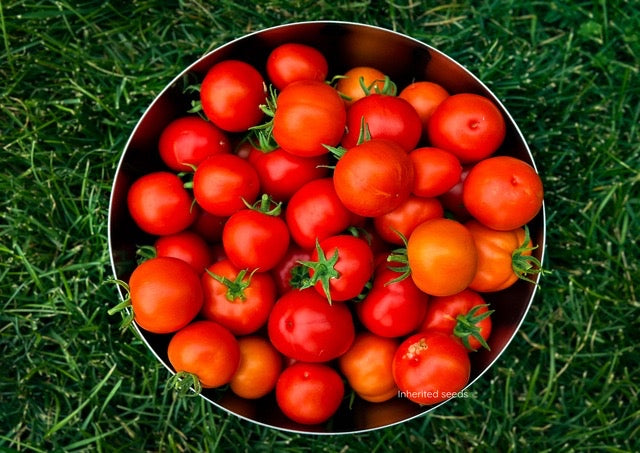
Nati Tomato is the tangy, juicy country tomato Indian cooks miss most in the US. Smaller and more sour than supermarket tomatoes, with thin skins and tons of flavor, it melts into rasam, tomato thokku, Andhra tomato pappu and every curry base. This heirloom vine is prolific and reliable, so you'll have baskets for cooking, chutneys and canning.
Why Grow Nati Tomato?
- The tangy, authentic tomato Indian recipes need
- Juicy, thin-skinned fruits that cook down fast
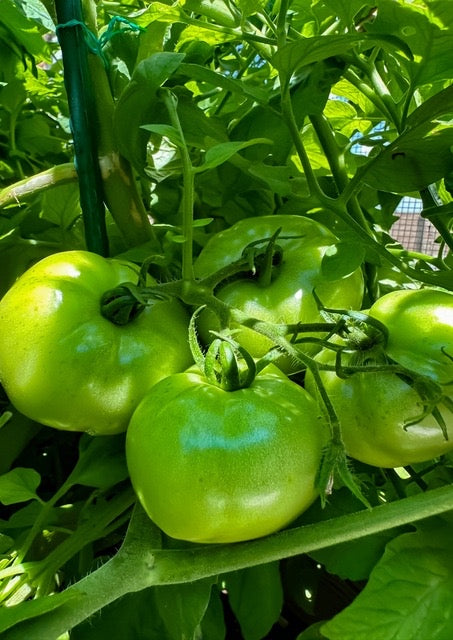
- Prolific vines that produce until frost
- Perfect for rasam, thokku, chutney and sauces
- Open-pollinated, so you can save seed every year
Plant Profile
Plant Profile
Botanical Name: Solanum lycopersicum
Common Name: Nati Tomato, Desi Tomato, Country Tomato
Type: Heirloom, open-pollinated
Crop: Fruiting vegetable
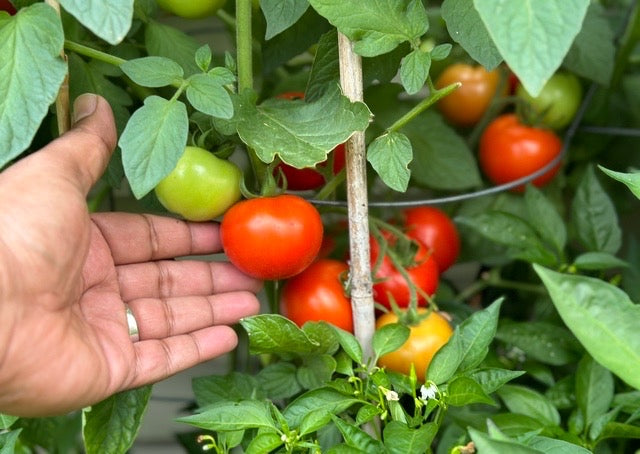
Fruit Color: Bright red, small to medium, round to slightly flattened
Plant Habit: Indeterminate vine, 4–6 ft
Season: Warm season, summer to frost
Sun: Full sun, 6–8+ hours
Days to Harvest: 70–80 days from transplant
Sowing Depth: 1/4 in.
Germination: 5–10 days at 70–85°F soil
Harvest: Pick fully red and slightly soft for the best tang
Garden Use: Garden beds, raised beds, large containers with cages
Culinary & Traditional Uses
Culinary & Traditional Uses
Nati tomatoes are tangier and juicier than slicing tomatoes, which makes them ideal for cooking.
- Tomato Rasam: tangy pepper-cumin soup
- Thakkali Thokku: spicy tomato relish that keeps for weeks
- Tomato Pappu: Andhra tomato dal
- Tomato Chutney for idli and dosa
- Curry bases, sambar and kuzhambu
- Homemade sauces and canning
How to Grow
How to Grow
Start tomatoes indoors and transplant once frost danger has passed.
- Start seeds indoors 6–8 weeks before your last frost date, 1/4 in. deep.
- Keep soil at 70–85°F; seedlings appear in 5–10 days. Provide strong light.
- Harden off and transplant 1–2 weeks after your last frost, burying stems up to the first leaves.
- Space plants 24–36 in. apart and add a cage or stake at planting.
- Mulch and water deeply 1–2 times a week at the base of the plant.
- Prune lower leaves and some suckers for airflow.
- Harvest fully red fruits every few days through summer.
What NOT To Do
- Don't transplant before nights stay above 50°F
- Don't water the leaves, which spreads disease
- Don't water unevenly, which causes cracking and blossom-end rot
- Don't plant in the same spot as last year's tomatoes, peppers or eggplants
Regional & International Names
Regional & International Names
- Tamil: Nattu Thakkali (நாட்டுத் தக்காளி)
- Telugu: Natu Tamata (నాటు టమాటా)
- Kannada: Nati Tomato (ನಾಟಿ ಟೊಮೇಟೊ)
- Malayalam: Nadan Thakkali (നാടൻ തക്കാളി)
- Hindi: Desi Tamatar (देसी टमाटर)
- Bengali: Deshi Tomato
- English: Indian Country Tomato
FAQ
FAQ
Why are Nati tomatoes tangier?
Traditional Indian country tomatoes are naturally more acidic, which gives rasam and chutneys their signature tang.
Do I need to stake them?
Yes. This is an indeterminate vine, so use a sturdy cage or stake.
Can I save seeds?
Yes. Scoop seeds from a ripe fruit, ferment in water for 2–3 days, rinse and dry.
Seed Quality Promise
Seed Quality Promise
Every packet is heirloom, open-pollinated, non-GMO and untreated. We grow select varieties ourselves in Illinois and source the rest from trusted seed growers in the US and India. Seeds are stored cool and dry and hand-packed in small batches. Questions about your order? Email inheritedseeds@gmail.com and we'll make it right.
Share