Indian Heirloom Ridge Gourd Seeds – Luffa /Beerakaya
Indian Heirloom Ridge Gourd Seeds – Luffa /Beerakaya
Couldn't load pickup availability
Indian Ridge Gourd · Heirloom · Open-Pollinated · Naturally Grown · Non-GMO · Traditional to India
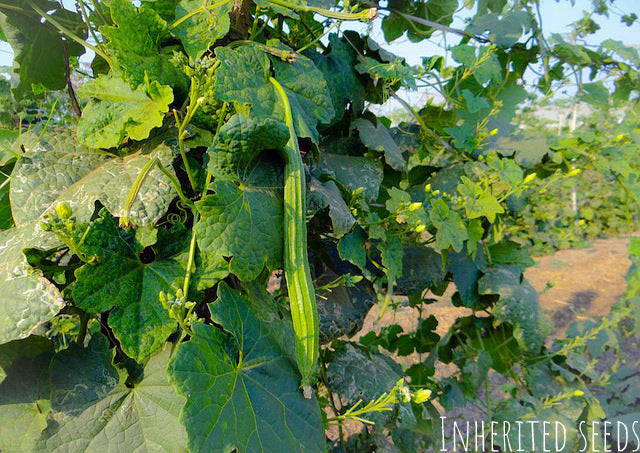
Indian Ridge Gourd is a summer favorite in kitchens across India: beerakaya, turai, peerkangai. The vigorous vines produce long, dark green gourds with sharp ridges and tender, mildly sweet flesh that cooks down silky in pappu, kootu and sabzi. Even the peels become a tasty chutney. Our seeds come from plants grown on our own farmland near Peoria, Illinois.
Why Grow Ridge Gourd?
- Tender, mildly sweet gourds for everyday Indian cooking
- Even the peels make a tasty chutney
- Vigorous, high-yielding summer vines
- Seed grown near Peoria, Illinois
- Open-pollinated, so you can save seed every year
Plant Profile
Plant Profile
Botanical Name: Luffa acutangula
Common Name: Ridge Gourd, Beerakaya, Turai, Chinese Okra
Type: Heirloom, open-pollinated
Crop: Gourd vegetable
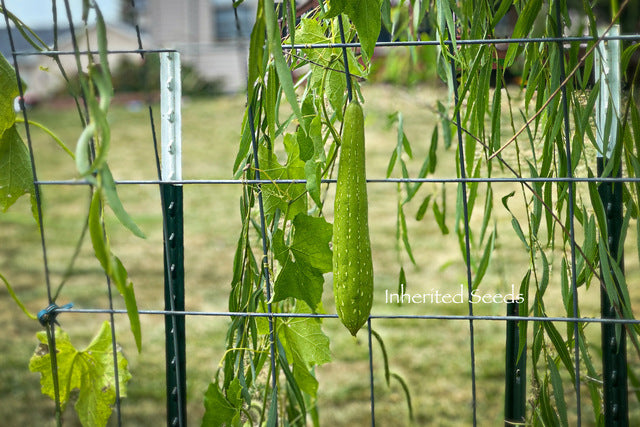
Fruit Color: Dark green with sharp ridges
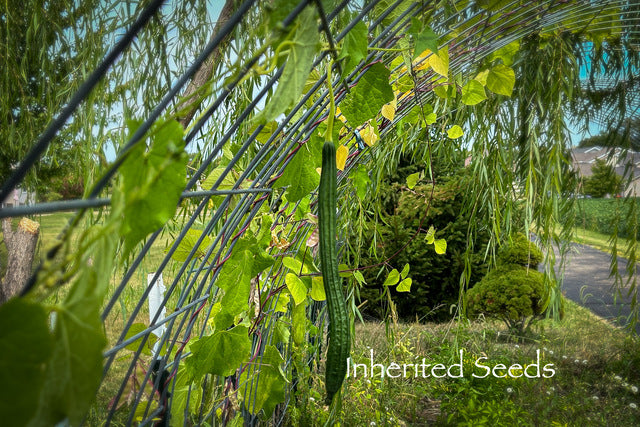
Plant Habit: Climbing vine, 10–15 ft
Season: Warm season, summer
Sun: Full sun, 6–8+ hours
Days to Harvest: 60–70 days from sowing
Sowing Depth: 1/2–1 in.
Germination: 7–14 days at 75–90°F soil
Harvest: Pick young at 8–12 in., while firm and tender
Garden Use: Trellises, arches, strong fences
Culinary & Traditional Uses
Culinary & Traditional Uses
Peel the sharp ridges, then slice. Save the peels for chutney.
- Beerakaya Pappu: Andhra ridge gourd dal
- Peerkangai Kootu: with moong dal and coconut
- Turai Sabzi: light North Indian curry
- Beerakaya Tokku Pachadi: chutney from the peels
- Dodka Bhaji: Maharashtrian stir-fry
- Chinese-style stir-fry with garlic and egg
How to Grow
How to Grow
Ridge gourd grows fast in heat. Soak the seeds and give the vines tall support.
- Soak seeds for 12–24 hours.
- Sow outdoors 2 weeks after your last frost date, or start indoors in 4 in. pots 3–4 weeks before.
- Plant 1/2–1 in. deep, 2–3 ft apart, beside a trellis at least 6 ft tall.
- Water deeply and mulch; feed with compost when flowering starts.
- Hand-pollinate in the morning if fruits drop early.
- Harvest gourds young at 8–12 in., checking every 2–3 days.
- Leave a few to mature and dry on the vine for seed.
What NOT To Do
- Don't plant out before nights stay above 55°F
- Don't let gourds get big; they turn fibrous fast
- Don't let soil dry out during flowering
- Don't skimp on support
Regional & International Names
Regional & International Names
- Telugu: Beerakaya (బీరకాయ)
- Hindi: Turai, Tori (तुरई)
- Tamil: Peerkangai (பீர்க்கங்காய்)
- Kannada: Heerekayi (ಹೀರೇಕಾಯಿ)
- Malayalam: Peechil (പീച്ചിൽ)
- Marathi: Dodka (दोडका)
- Gujarati: Turiya (તુરિયા)
- Bengali: Jhinge (ঝিঙে)
- English: Ridge Gourd, Angled Luffa, Chinese Okra
FAQ
FAQ
How is ridge gourd different from sponge gourd?
Ridge gourd has sharp ridges along its length; sponge gourd is smooth. Both are eaten young.
When should I pick it?
At 8–12 in., while firm and tender. Older gourds turn fibrous.
Can I eat the peel?
Yes, cooked. Ridge gourd peel chutney is a South Indian favorite.
Seed Quality Promise
Seed Quality Promise
Every packet is heirloom, open-pollinated, non-GMO and untreated. We grow select varieties ourselves in Illinois and source the rest from trusted seed growers in the US and India. Seeds are stored cool and dry and hand-packed in small batches. Questions about your order? Email inheritedseeds@gmail.com and we'll make it right.
Share