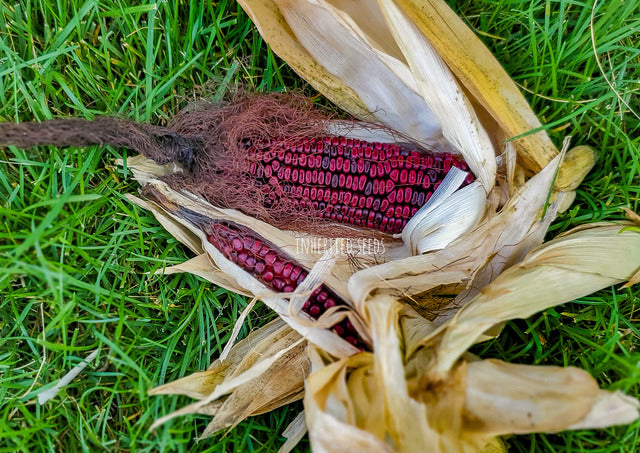
Corn Dent Bloody Butcher - Extremely Rare
Corn Dent Bloody Butcher - Extremely Rare
Couldn't load pickup availability
Bloody Butcher Corn · Heirloom · Open-Pollinated · Naturally Grown · Non-GMO · Traditional to Virginia
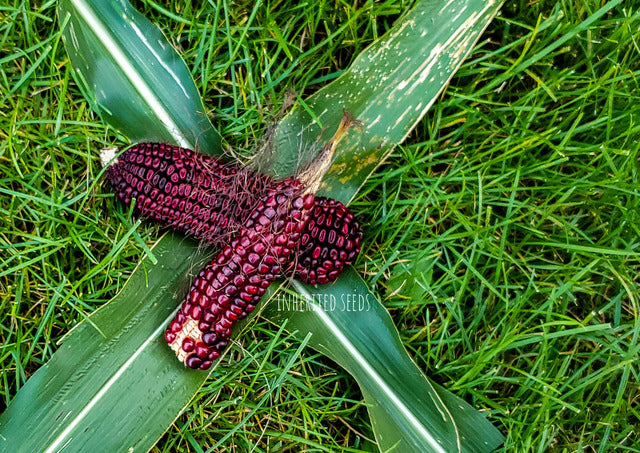
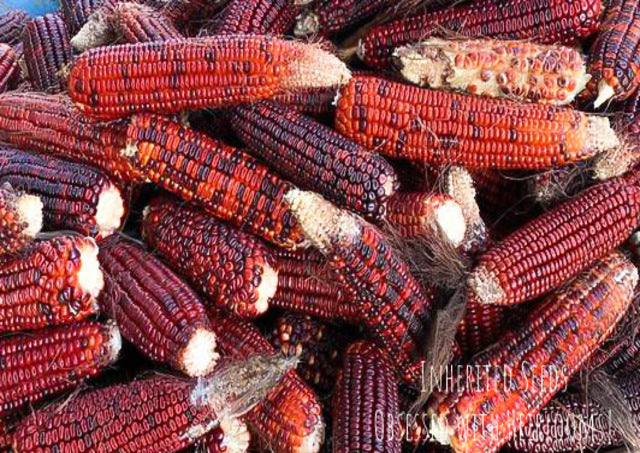
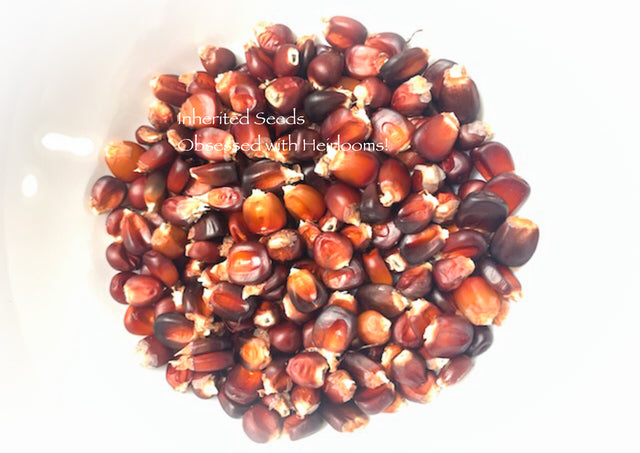
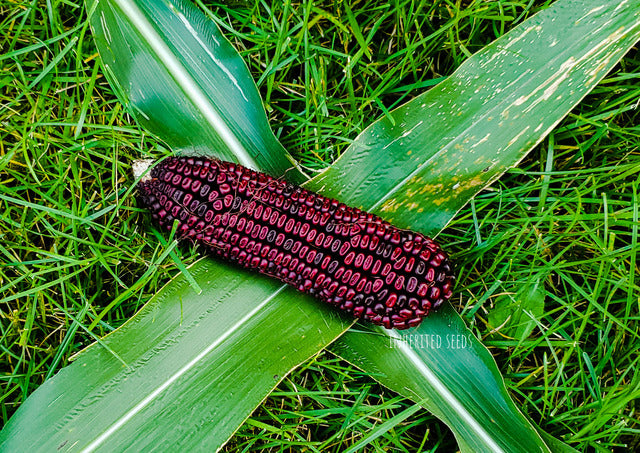
Bloody Butcher is a rare heirloom dent corn dating back to around 1845, named for kernels as red as a butcher's apron. Towering 10–12 ft stalks bear 8–12 in. ears of deep red kernels, sometimes flecked with other colors. Grind the dried kernels into rosy cornmeal and flour for cornbread and grits, roast young ears like sweet corn, or display the ears for fall decor.
Why Grow Bloody Butcher Corn?
- Rare heirloom dent corn from about 1845
- Deep red kernels on 8–12 in. ears
- Grind into colorful cornmeal and flour
- Young ears for roasting
- Stunning for fall decor
Plant Profile
Plant Profile
Botanical Name: Zea mays
Common Name: Bloody Butcher Dent Corn
Type: Heirloom, open-pollinated
Crop: Dent corn for meal, flour and roasting
Kernel Color: Deep red to maroon, sometimes flecked
Plant Habit: Tall stalks, 10–12 ft
Season: Warm season
Sun: Full sun
Days to Harvest: 100–120 days for dry corn
Sowing Depth: 1–1.5 in.
Germination: 5–10 days at 60–85°F soil
Harvest: Pick young for roasting, or leave ears to dry on the stalk for meal
Garden Use: Garden blocks, homesteads, fall displays
Culinary & Traditional Uses
Culinary & Traditional Uses
Dent corn is starchy, ideal for grinding. Young ears can be roasted like sweet corn.
- Rosy cornmeal for cornbread and muffins
- Grits and polenta
- Corn flour for tortillas and rotis
- Roasted young ears with butter or chilli-lime
- Makka di roti with sarson ka saag
- Dried ears for fall decor
How to Grow
How to Grow
Plant corn in blocks, not single rows, so the plants pollinate well.
- Sow outdoors 1–2 weeks after your last frost date, when soil is at least 60°F.
- Plant in a block of at least 4 short rows, 1–1.5 in. deep and 8–12 in. apart, with rows 30–36 in. apart.
- Keep soil moist until seedlings emerge in 5–10 days.
- Feed with compost or a nitrogen-rich fertilizer when plants are knee-high.
- Water deeply, especially when tassels and silks appear.
- For roasting, pick when silks turn brown and kernels are milky.
- For meal, let ears dry fully on the stalk, then shell and store the kernels dry.
What NOT To Do
- Don't plant in a single row; pollination will be poor
- Don't plant near sweet corn; cross-pollination makes sweet corn starchy
- Don't let plants dry out during tasseling
- Don't store kernels before they're fully dry
Regional & International Names
Regional & International Names
- Hindi: Makka, Bhutta (मक्का)
- Tamil: Makkacholam (மக்காச்சோளம்)
- Telugu: Mokkajonna (మొక్కజొన్న)
- Kannada: Musukina Jola (ಮುಸುಕಿನ ಜೋಳ)
- Spanish: Maíz
- English: Dent Corn, Field Corn
FAQ
FAQ
Can I eat it like sweet corn?
Young ears can be roasted, but it is a dent corn and less sweet. It shines as cornmeal and flour.
How much space do I need?
Plant at least a 4 x 4 block of plants so they pollinate each other.
How many seeds are in a pack?
Each pack has at least 30 seeds.
Share